

VpnHood! CLIENT
Fast, secure, and reliable VPN solution powered by VpnHood! ENGINE, which is open-source and the first VPN developed fully with the .NET platform.
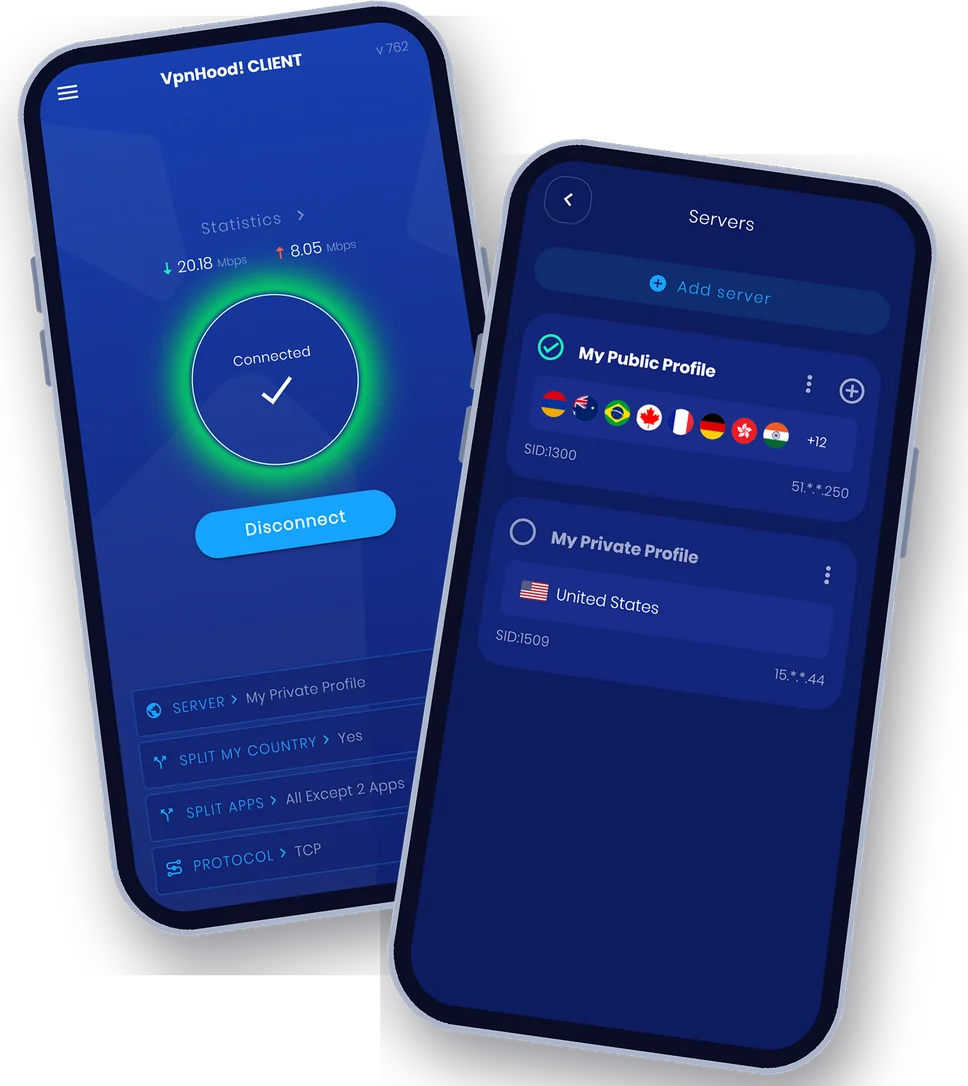
VpnHood! CLIENT is the free, open-source app your users install, on Android, iOS, Windows and Linux. It is built so the person holding the key needs no explanation:
-
Paste a key, done
Add an access key and you are connected — no account, no sign-up, nothing to configure.
-
Fast and light
Light enough to leave running all day, with speed to spare for streaming and video calls.
-
Your server, your rules
The app talks to your server and nothing else. There is no VpnHood account behind it, no traffic through us, and no one else to trust.
Built on VpnHood! ENGINE
CLIENT is a thin app over VpnHood! ENGINE, the same open-source engine that drives VpnHood! CONNECT and every VpnHood! server. The protocols, the split tunneling, the cloak mode and the proxy support all live in the engine, so nothing here is a cut-down version of anything.
-

Protocols
Holds an encrypted connection steady on networks that keep trying to drop it.
-

Cloak Mode
Dresses the tunnel as ordinary web traffic, so a probe gets a plain web-server reply.
-
Smart Proxies
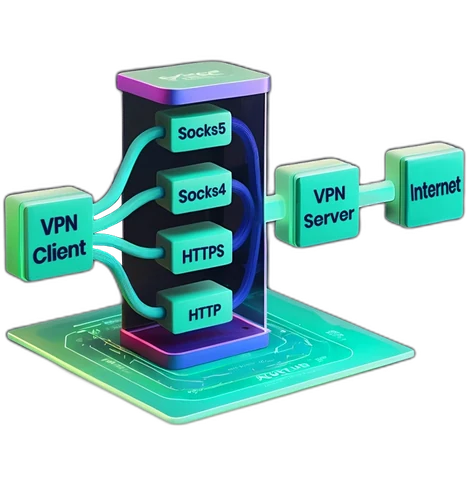
Reach your server through SOCKS or HTTP proxies when the direct route is blocked.
-

Split tunneling
Choose what goes through the VPN by app, address, domain or country.
-
Private DNS
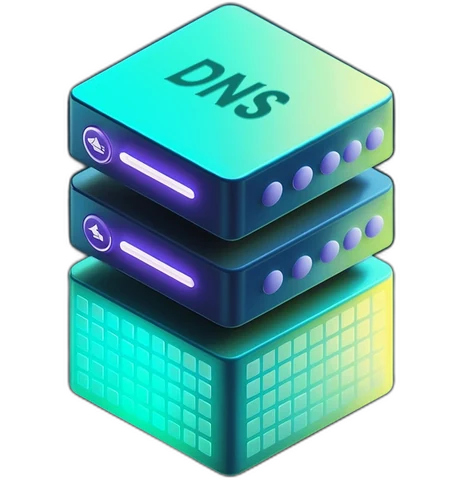
Decide which resolver answers, and keep lookups inside the tunnel.
-

Kill Switch
Blocks traffic the moment the tunnel drops, until it is back.
It connects to your server, not ours
CLIENT has no servers of its own. It connects to a VpnHood! server that you, or someone you trust, already runs, using an access key they give you. If nobody has set one up yet, start here.
Self-hosted VPN
What running your own server involves, and what it costs.
VpnHood! SERVER
The server itself: install it on a machine you rent or own.
VpnHood! MANAGER
Create and revoke access keys, and watch usage, from one place.
Open source, end to end
The app, the engine and the server are all published on GitHub, and the project has been audited by Include Security for the Open Technology Fund's Red Team Lab. A VPN asks for every packet you send; this one lets you read what it does with them.
Read the code on GitHub (opens in new tab)Read about the audit


